Select Template
Choose certified blueprint (gRPC, GraphQL, REST).
How modern platform engineering builds a single pane of glass for developer self-service, multi-cloud Kubernetes orchestration, automated golden paths, autonomous AI platform agents, and production readiness governance.
Modern cloud-native architectures have overwhelmed developers with cognitive load. Platform engineering treats internal infrastructure as a curated software product.
In traditional organizations, developers must navigate a labyrinth of disjointed tools: AWS and GCP management consoles, Terraform scripts, Helm charts, Kubernetes YAMLs, Vault secrets, ArgoCD pipelines, Datadog dashboards, and Jira tickets. This phenomenon—known as "TicketOps"—creates severe engineering friction, context switching, and days-long delays for simple operational tasks.
An Internal Developer Platform (IDP) solves this by aggregating all underlying infrastructure into an automated, self-service developer portal. Rather than restricting engineers or forcing them to understand low-level cloud configurations, the IDP provides clear "Golden Paths": pre-architected, security-hardened templates that empower developers to autonomously ship software without opening ops tickets.
A single real-time data model connecting microservices, cloud resources, K8s clusters, API definitions, and team ownership into an interconnected knowledge graph.
1-click golden paths for Day-1 provisioning (microservices, databases, CI/CD) and Day-2 operations (rollbacks, pod restarts, ephemeral preview environments).
Automated production readiness checks, vulnerability benchmarks, FinOps cost attribution per microservice, and continuous compliance standards.
Autonomous LLM agents using the Model Context Protocol (MCP) to query telemetry, triage production logs, and execute runbook remediations securely.
The foundational primitive of an IDP is the Software Catalog. Rather than static wikis that quickly grow stale, the IDP maintains a real-time relationship graph across all software assets.
Extensible JSON entity blueprints declaring attributes, relations, and team ownership.
Live workloads with Git commit SHAs, assigned on-call rotas, and real-time telemetry.
Validated OpenAPI 3.0 schemas harvested from ingress controllers with interactive sandboxes.
Relational dependency graphs linking microservices to cloud DBs, caches, and queues.
A high-performing IDP moves far beyond initial scaffolding. It accelerates the entire application lifecycle through standardized, secure actions.
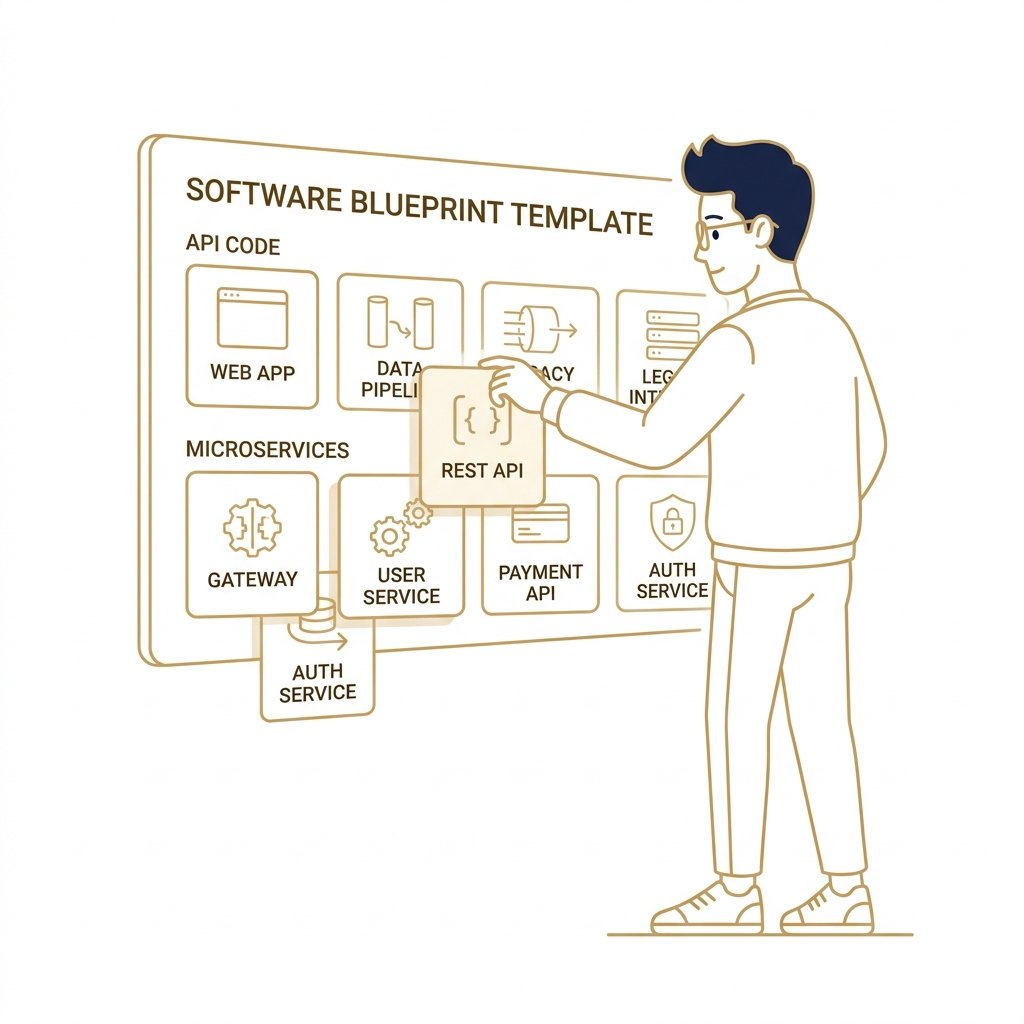
Choose certified blueprint (gRPC, GraphQL, REST).
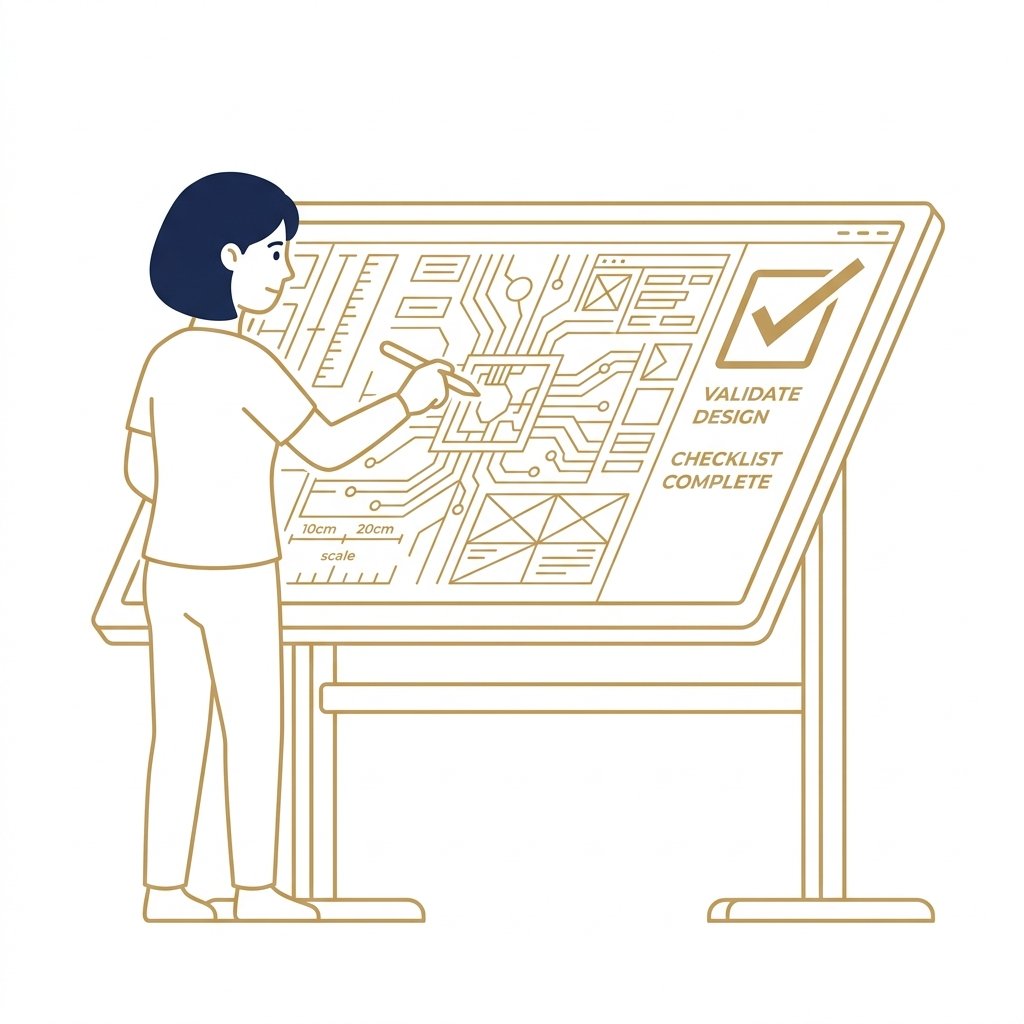
IDP checks resource tiers, regions, and policies.

Terraform manifests commit; ArgoCD deploys.
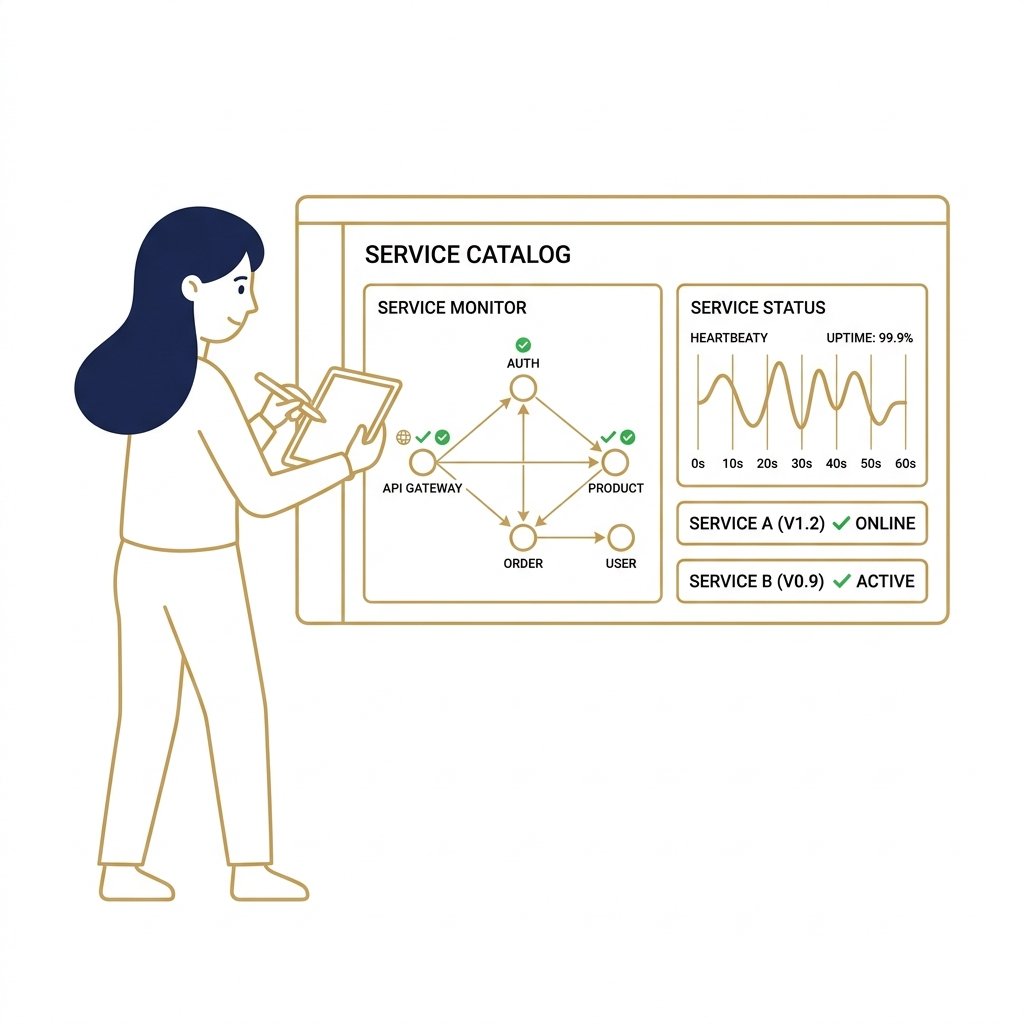
Service registers with live health & telemetry.
Enterprise workloads rarely reside in a single cloud. Our IDP architecture unifies heterogeneous Kubernetes clusters spanning AWS, GCP, and Azure under a synchronized control plane. Click on any cluster below to inspect nodes, telemetry, and declarative GitOps manifests.
High-throughput Kubernetes cluster with Karpenter autoscaling and zero-trust Cilium isolation.
Distributed multi-region clusters with geo-DNS latency routing and cross-cloud failover redundancy.
Self-service multi-tenant Kubernetes namespaces with automated RBAC and declarative ArgoCD sync.
The next evolution of platform engineering combines generative AI with operational tools. By adopting the open Model Context Protocol (MCP), autonomous agents connect directly to live telemetry and API gateways. Click any workflow below to see live triage sessions and MCP protocol schemas.
When a microservice enters CrashLoopBackOff or triggers high-latency alerts, the autonomous AI agent instantly queries Kubernetes logs and correlates Prometheus memory usage graphs.
Rather than waking on-call engineers for known issues, the agent diagnoses the memory bottleneck and prepares a validated Day-2 remediation action.
$ ask-idp "payment-server restarting in us-east-1"

[MCP Client] Invoking: k8s_get_pod_logs(service='payment-server')
[MCP Client] Invoking: prometheus_query_memory(service='payment-server')

[Agent Diagnosis]:
- Pod terminated with OOMKilled (Exit Code 137).
- Peak heap reached 518MiB during payment batch processing.
- Zero Critical CVEs detected.

[Remediation]: Increase memory limit to 1024MiB via Day-2 Action.Our IDP uses Model Context Protocol (MCP) servers to grant LLMs structured, sandboxed tool access to live Kubernetes clusters, Prometheus metrics, and Git repositories.
All tool executions require strict RBAC validation, parameter schema enforcement, and immutable audit logging.
{
  "name": "scale_microservice_replicas",
  "description": "Adjusts HPA target or fixed pod replica count",
  "inputSchema": {
    "type": "object",
    "properties": {
      "service": { "type": "string" },
      "replicas": { "type": "integer", "minimum": 1, "maximum": 50 },
      "reason": { "type": "string" }
    },
    "required": ["service", "replicas", "reason"]
  }
}Platform teams succeed not through bureaucratic gates, but by gamifying production standards. Scorecards define quantifiable benchmarks across security, reliability, documentation, and cloud expenditure. Click below to inspect rules and live policy enforcement.
Automated CVE scans with Trivy and Snyk. Workloads must have 0 Critical and < 2 High vulnerabilities to pass scorecard benchmarks and promote to production environments.
Enforced at build time via GitHub Actions and at runtime via Open Policy Agent (OPA) Gatekeeper admission webhooks.
package idp.scorecards

default allow_production_deploy = false

allow_production_deploy {
    input.security.critical_cves == 0
    input.security.high_cves < 2
    input.reliability.has_liveness_probe == true
    input.documentation.has_openapi_spec == true
}Tags every Kubernetes pod, RDS database, and OpenAI/Claude token invocation to allocate monthly infrastructure spend directly to owning squads.
Real-time budget alerts trigger in Slack when a microservice exceeds 85% of its monthly cost allocation, preventing cloud billing surprises.
How engineering organizations transition from fragmented operations to an autonomous Internal Developer Platform.
Developers file Jira tickets for infrastructure, new databases, or firewall rules. High manual effort, ops bottleneck, and long lead times.
Terraform modules and basic Jenkins/GitHub Actions pipelines exist. However, developers still need deep knowledge of cloud configuration syntax.
Centralized software catalog with Day-1 scaffolding actions and basic scorecard tracking. Developer cognitive load drops dramatically.
Full Day-1 & Day-2 self-service, multi-cloud Kubernetes control plane, FinOps attribution, and AI agents powered by Model Context Protocol (MCP).